
Should Commercial Brokers FICA the Landlord — or Only the Tenant?
A practical commercial-property compliance view when a landlord is represented by a property manager or managing agent.
In commercial leasing, brokers are usually quick to request FICA documents from the tenant. That is standard practice and, in most transactions, rightly so.
But a practical compliance question often arises on the other side of the transaction: what happens when the landlord is represented by a property management company?
In many commercial-property deals, the owner is not the party with whom the broker deals day to day. The legal owner may be a sectional title company, a private landlord, a property fund or a listed REIT, while leasing instructions are issued through a managing agent or portfolio manager.
The broker should not ignore the owner simply because the manager is the person giving instructions.
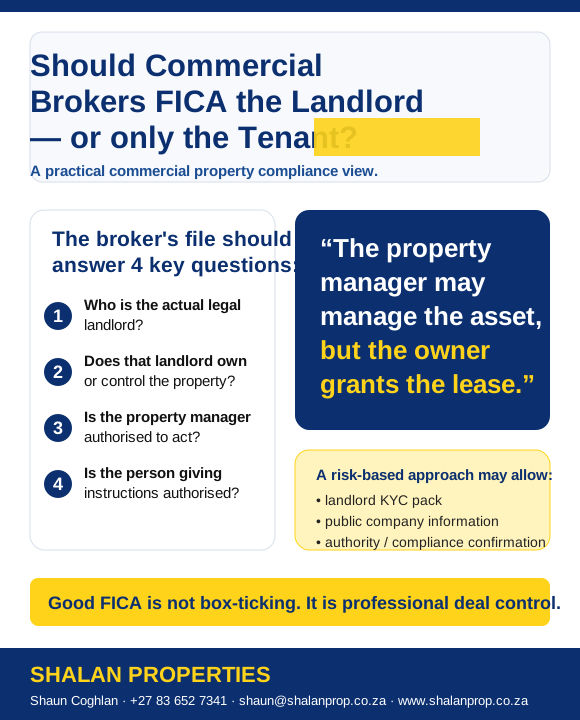
The property manager may manage the asset, but the owner grants the lease.
Four questions the broker's file should answer
- Who is the actual legal landlord?
- Does that landlord own or control the property?
- Is the property manager authorised to act for the landlord?
- Is the person signing or giving instructions properly authorised?
This does not always mean a bulky landlord FICA pack
A practical, risk-based approach may be appropriate. Depending on the landlord and transaction, the broker may be able to rely on a standard landlord KYC pack, public company or fund information, a management authority letter, or a compliance confirmation from the fund or managing agent.
The purpose is not paperwork for its own sake. It is to identify the real landlord, understand who has authority to instruct, establish who may sign, and maintain a defensible transaction file.
Why this matters commercially
Proper landlord verification protects more than compliance. It can help protect the transaction, the tenant, the landlord and the broker's commission position by reducing uncertainty over ownership, authority and execution.
Practical takeaway
Where a property manager is involved, do not assume the manager replaces the landlord for compliance purposes. The broker's file should still clearly identify the legal landlord, the authority chain and the basis on which the managing agent is acting.
Good FICA is not box-ticking. In commercial property, it is part of professional deal control.
Compliance note: this article is general commercial-property information and practical industry commentary. Specific FICA and KYC obligations should be considered against the applicable legal framework, the broker's RMCP and internal procedures, and specialist legal or compliance advice where appropriate.