
How Are Commercial Properties Valued?
For most income-producing commercial and industrial properties, value is driven primarily by sustainable net income, risk and the market yield investors require.
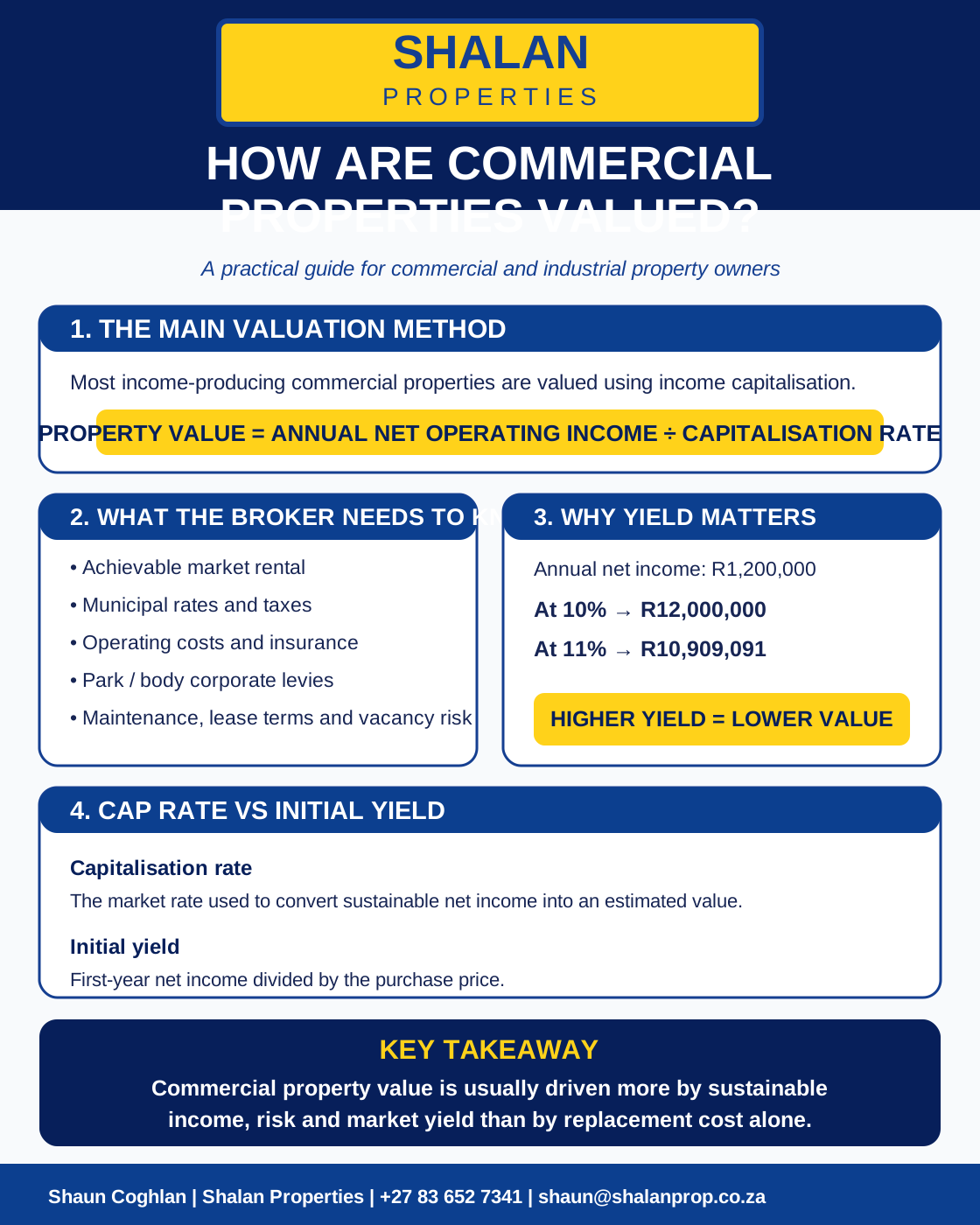
Commercial-property owners sometimes assume that value is based mainly on replacement cost or on recent comparable sales. Both can be useful checks, but most income-producing commercial and industrial properties are commonly assessed through the income capitalisation approach.
The core valuation formula
The formula is simple. The difficult part is determining a realistic, sustainable income and selecting an appropriate capitalisation rate for the specific property and market.
Start with sustainable net operating income
The broker or valuer needs to look beyond the advertised gross rental and understand the income the property can sustainably produce after the relevant property-level costs and risks are taken into account.
- Achievable market rental
- Municipal rates and taxes
- Operating costs
- Building insurance
- Park or body corporate levies
- Maintenance and recoveries
- Lease terms, vacancies and rental concessions
Lease expiry profiles, vacancies, incentives and rentals that are materially above or below market can all affect the sustainable income used for valuation purposes.
Why the yield matters
The capitalisation rate reflects the return the market requires for the income stream and the risks attached to the property. Location, condition, lease length, tenant quality, vacancy risk, functionality and investor demand all play a role.
A higher required yield produces a lower capital value because the purchaser requires a greater return on the amount invested.
Capitalisation rate vs initial yield
The terms are often used interchangeably in everyday market discussion, but they can describe different things. Initial yield measures the first-year net income against the purchase price, while a capitalisation rate is the market rate used to convert sustainable income into an estimated value.
The distinction becomes more important where rent is above or below market, a lease is close to expiry, vacancy exists or temporary incentives distort the first-year income.
What about replacement cost?
Replacement cost remains relevant as a sense-check, particularly for specialised or newer buildings, but the cost of constructing a similar facility does not automatically determine what an investor will pay for the existing income stream.
In established business parks, replacement cost can be higher than the value supported by current rentals. An owner-occupier may nevertheless pay a premium where the property offers strategic advantages such as the right location, layout, power supply, yard, security or expansion potential.
Key takeaway
Commercial-property valuation requires more than applying a formula. The quality of the result depends on realistic rental evidence, accurate expenses, lease analysis, vacancy risk and an informed view of the yield investors are applying in that particular market.