
Can a Prospective Tenant Submit a Counter-Offer on a New Development?
Yes — but the decision should be based on the total occupancy cost, not just the headline base rental.
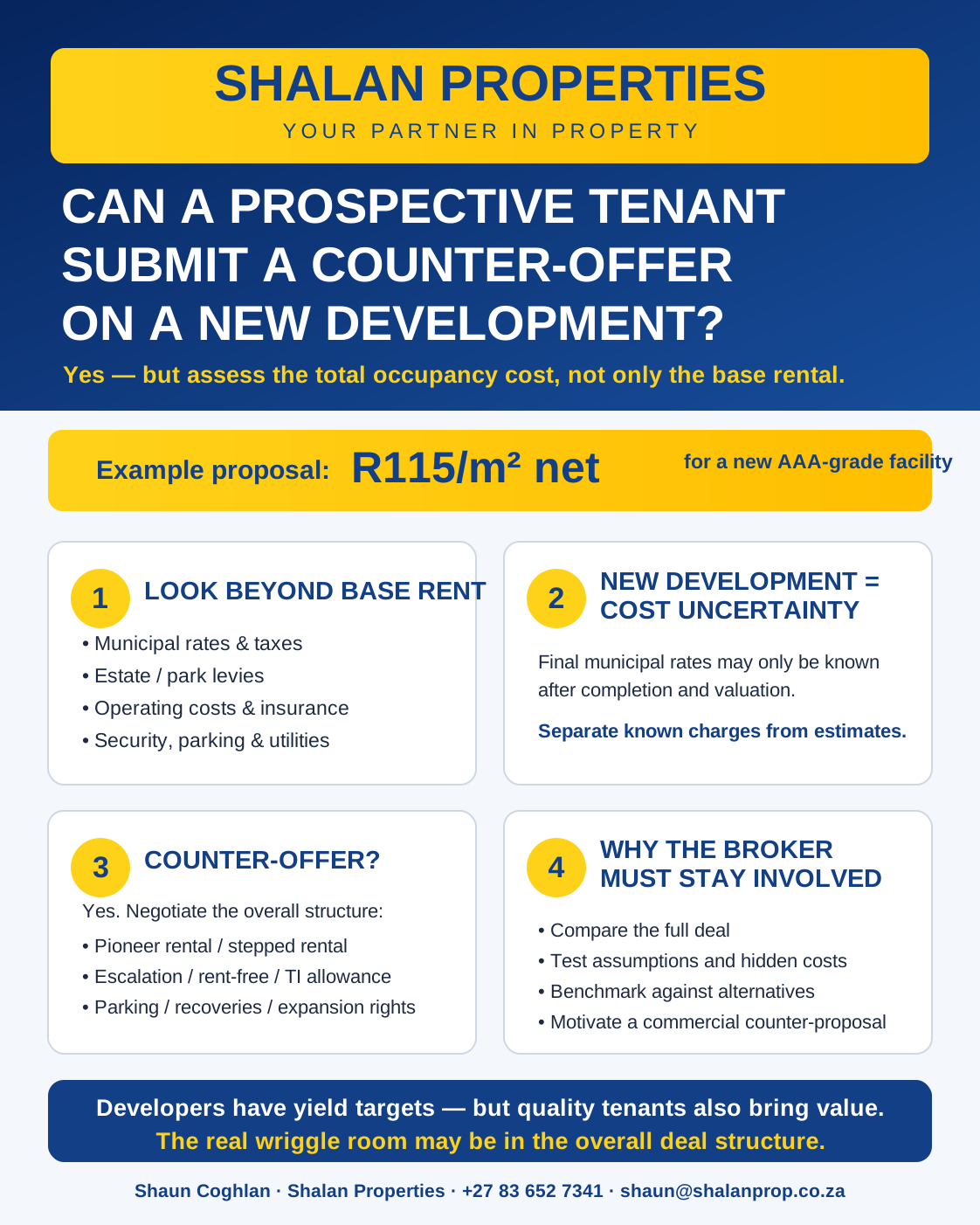
Suppose a developer proposes a new AAA-grade industrial facility in a prime location at a base net rental of R115/m². The obvious question from the prospective tenant is whether that rental is market-related. But the headline rental is only one part of the decision.
Start with the total occupancy cost
Before comparing a proposal with alternative buildings, the broker should establish the estimated all-in monthly cost of occupation. That means looking beyond the base rental to the full recovery structure.
- Municipal rates and taxes
- Estate or park levies
- Operating costs
- Building insurance
- Security and common-area charges
- Parking, utilities and other recoveries
Two buildings with similar base rentals can produce very different effective occupancy costs once these items are added.
New developments bring an extra layer of uncertainty
Municipal rates are a good example. On a new development, the final rates charge may only become clear once construction is complete and the municipality has valued the finished property. Until then, any rates recovery is necessarily an estimate.
A sensible proposal should therefore separate known charges from estimated charges and explain how any later adjustment will be dealt with under the lease.
Existing buildings are useful comparables — but not perfect ones
Nearby existing facilities provide useful rental evidence, but the comparison needs context. A purpose-built new facility may offer specifications, security, access, energy efficiency, yard design, amenities or future expansion potential that an older building cannot match.
The broker therefore needs to compare the value of the complete proposition rather than treating every square metre as identical.
Can the tenant counter-offer?
Absolutely. A prospective tenant can submit a commercially motivated counter-proposal. The developer is equally free to accept it, reject it or respond with revised terms.
Importantly, the negotiation does not have to focus only on the base rental. Other terms can materially change the economics of the deal.
- Pioneer rental
- Lease term and escalation
- Beneficial occupation
- Tenant installation allowances
- Rental-free periods
- Stepped rentals
- Parking and operating costs
- Expansion rights
Developers have yield targets — but tenants also bring value
A developer will have a required return, construction-cost assumptions and funding parameters that limit how far headline rental can move. But a credible tenant offering a long lease, acceptable covenant strength and early commitment can also add meaningful value to the development.
That is why the most productive negotiation is often about the overall structure rather than simply demanding a lower rental.
Why the tenant’s broker should stay involved
The broker’s role is not merely to introduce the property. It is to test assumptions, compare alternatives, quantify the full cost of occupation and help the tenant put forward a properly reasoned counter-proposal.
That keeps the negotiation commercial rather than adversarial. The objective is not to obstruct a development or force an unrealistic reduction. It is to help the tenant make a fully informed decision and reach a lease that is transparent and sustainable for both parties.
The real “wriggle room” may be in the rental, escalation, incentives, recoveries, lease term or the overall deal structure — and often in a combination of several of them.